Up next in 10



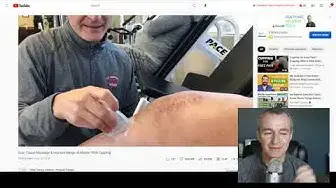
Cupping over an incision following a total knee replacement may improve skin mobility and superficial lymphatic drainage, but it likely won't break up scar tissue.
Related videos: https://youtu.be/p1nMR9MtMtU
https://youtu.be/8zhqefircE8
💚 Recommended YouTube / Amazon Products 💚:
✔️Best Cold Gel Pack: https://amzn.to/3FpRcM5
✔️Calf Stretch Wedges: https://amzn.to/3CpffZs
✔️Frozen Massage Roller: https://amzn.to/3nllBop
✔️Seated Pedal Bike: https://amzn.to/3ClmnWI
*As an Amazon Associate I earn from qualifying purchases.
Visit our Blog: https://totaltherapysolutions.com/shoes-to-wear-after-knee-replacement/
About the author:
Hi, my name is Anthony (Tony) Maritato, PT. I am a licensed physical therapist and owner of Total Therapy Solutions. I have specialized in helping clients recover from total knee replacement surgery since 2002 and have created this video to help YOU.
Total Therapy Solutions
5900 Long Meadow Dr
Middletown, OH 45005
(513) 539-2886
Show More Show Less View Video Transcript
0:00
Hey guys, Tony Maritato here, licensed physical therapist and in today's video I want to talk
0:05
about cupping, the ancient Chinese art of cupping and how it can affect or influence
0:12
scar tissue formation, scar tissue development and potentially the aesthetics, the look of
0:19
your incision after it's been healed following a total knee replacement. So if you guys don't know me, my name is Tony Maritato
0:26
I'm a licensed physical therapist. I work here in Ohio. i also have a facebook group called the total knee replacement support group for kind people
0:35
it's a free group you're welcome to come join it's an amazing community over 7 000 people strong
0:40
so i got a question in that group related to a scar and there were some fibrous thick areas in
0:48
the scar and the person member from the group was asking if pumping or instrument assisted soft
0:53
tissue mobilization might help reduce some of that fibrousness. Now, I tend to be of the mindset
1:00
that there is absolutely benefit to the clinical research. The clinical research in this case
1:07
in my opinion, suggests that cupping and instrument-assisted soft tissue mobilizations probably no better than placebo. But that being said, I also believe that there's support for
1:22
you know, what we see that works in the clinic, whether it be placebo, whether it be something
1:27
that we just don't understand yet. So while clinically I cannot say that cupping or anything
1:34
else is going to help or influence how scar tissue is going to be formed because I believe your body is going to regulate that your body is going to thicken it or thin it your body is going to do what it needs to do I will say that it relatively low risk there there very few recorded
1:51
complications of any significant matter. I would say that when I've had issues with either pain in
1:58
an area related to soft tissue or some potential healing skin healing things like that I'll use
2:05
cupping. I'll use it in my clinic with my patients. I'll use it on myself at home. I would never try
2:11
to claim that there's good clinical evidence to support it. But because the risk of injury or
2:18
complication is so low, I think there's relatively low risk of harm in using it, especially using it
2:25
the way I use it. I don't use it to burst the capillaries. I don't use it to create those red
2:31
splotches, purple splotches that you've seen online, if you've done any research for it
2:36
I simply use it as a gripping tool. I use it as a tool to grip the skin, lift the skin
2:42
potentially facilitate some superficial lymphatic drainage, potentially use it to create a negative
2:49
pressure on the surface of the skin. That's really all that I'm doing with it. And maybe you would
2:54
say that I'm doing it incorrectly because I'm not doing it the way it's intended. But that being said
3:00
I'm going to share a video with you. I'm going to explain what I'm doing and how, when I do use it
3:06
in the clinic, how I go about using it. So I'm going to keep this video on mute. I'm just going
3:11
to kind of let it play through and I'll explain what's going on. So this is an individual who's
3:15
got a sealed incision. It's completely healed except for one little spot that I'm going to
3:20
avoid at the top of the incision I put the leg into reasonable extension if not completely straight close to completely straight to give myself some laxity in the skin And then what I doing is I using this little silicone
3:34
cup. These are my favorite. I do have the pumps, but I like these better to create a little bit of
3:40
a bubble, a little bit of a lift. You can see how at least superficially the negative pressure is
3:46
drawing increased capillary refill blood flow into the superficial layer but i promise you it
3:54
does not affect the tissue deeper than the most superficial skin layer now what i'm doing and this
4:00
is a dry cupping procedure i'm creating a little bit of mobilization so maybe if there is a little
4:07
bit of scar tissue connecting the skin to the tissue below think of cellulite the way cellulite
4:13
is a piece of connective tissue that's dimpling the skin because it's grabbing the skin and pulling
4:19
it down, I might be mobilizing a little bit of that. I do believe that it also helps reduce some
4:25
sensitivity if there are nerve endings in there that are highly sensitized for whatever reason
4:31
And then what I do after I've done a little bit of dry soft tissue mobilization with the cup
4:36
I put a little bit of lotion on. This is a biotone, paraffin-based lotion. I spread it around
4:43
I create the suction with the cup again. And now this allows me to create a little bit of a gliding
4:49
motion. Again, I find that I can feel areas of restriction within the skin and it's just the skin
4:57
No different than when you look anywhere on your body, there's going to be little dimples in your
5:02
skin that skin is kind of tacked down in there now we want it to be dimpled in
5:06
there are reasons for that or else we would just be a big oval Visually it just you know your skin contours to the connective tissue of your body But maybe there some benefit to creating a little
5:23
lift and a little separation in there. I would certainly never claim that it's reducing scar
5:28
tissue. I would certainly never claim that it's breaking adhesions or anything like that
5:34
but at the end of the day sorry for the ad what i find there's another video i've got here let me
5:42
jump ahead what i find is that when we can stimulate altered sensation when we can create
5:50
different mechanical feedback like in this case again a lot of patients will develop pez and
5:57
sarine bursitis pain on the inside just below the joint line this has been a great way for me to
6:04
reduce some of that sensitivity i'm not saying it's reducing the inflammation i'm just saying
6:08
it's reducing some of the tissue sensitivity so i love these little cups i'll put a link
6:14
to amazon an affiliate link in the description of this video below for the ones that i use
6:19
they're a couple bucks each buy what you want to buy but between a couple dollars for some lotion
6:26
and a couple dollars for this silicone cup, I don't think you can really go wrong
6:31
And at least it gives you something to do that might potentially have benefit
6:36
but most likely doesn't have harm. If you have questions, if you have concerns
6:40
or any other, you know, want to know anything more, absolutely drop a comment in the video below
6:47
I'm going to put this into a printed article that I'll put on my website at totaltherapysolutions.com
6:53
And I'll look forward to seeing you guys on the next video
Cosmetic Procedures
Beauty Services & Spas
Massage Therapy
Physical Therapy
Jobs & Education
Acupuncture & Chinese Medicine