0:00
Alright, have you been doing, did we do this when you had the back issue before
0:06
On the leg? Yes. Okay, so I want to do it for the knee
0:10
You're going to put it on the knee? You're going to put it on the knee
0:14
So here's the thing. You don't have to go over the incision
0:18
It's not dangerous to go over the incision, but you don't have to
0:22
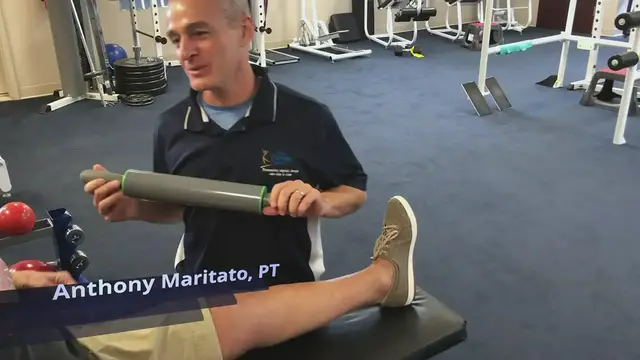
You don't have to go over the kneecap or anything like that. What you're going to do is you're going to put the roller right about here
0:29
So right above the incision. So bring it down here. And then you're going to roll up toward the hip
0:34
Don't hold it. You want to let it roll. Oh. There you go. And then you pick it up and you bring it down and you roll
0:41
Oh. And you pick it up. And so what we're doing is we're creating a little bit of a vacuum, right
0:47
We're pulling some of that fluid up into the hip, back into the system
0:52
letting the kidneys and everything process, all of that. You're going to do the top of it
0:57
And then you can let the leg kind of real. and get the inside a little bit for me. Go ahead. And you're in charge of how much pressure
1:06
you put through it. You can put a lot of pressure. It's totally safe or you can keep it kind
1:11
of light initially. If you find a spot that's sensitive or like lumpy or bumpy or
1:15
just doesn feel right you can put a little more time on that spot and then move away But basically what we doing here is we taking the fibers we spreading them horizontally right If you just stretch
1:29
stretching takes the fibers and stretches them lengthwise, but we want to spread them apart
1:33
And that's part of what this does. It also helps facilitate the fluid exchange
1:37
if we get the old fluid out. The new fluid comes in, brings nutrients, oxygen
1:42
everything you want. You got new fluid. You got new fluid. It's in there
1:46
Let's get the outer tip a little bit. It's like changing. in the oil. I heard a lot right to you. Yeah, the IT van is that outer leg. So I'm not sure
1:57
if this doctor does it, but a lot of doctors put a tourniquet around the thigh to
2:01
reduce blood loss, but that tourniquet causes tissue damage up around the thigh. So
2:06
the pain out here is really common. This is one of my favorite ways to reduce
2:11
some of that pain. So at home, get your rolling pin out. It could be metal, it
2:15
could be wood, it could be marble, get it out, put it next to where you spend
2:19
your time so you can't walk by without seeing it this way you remember it and
2:23
you're going to spend about three or four minutes on the upper thigh we're going to
2:27
do both legs so you're going to compare that leg to this leg and since that leg hasn't
2:31
had surgery and you you want to buy the time the healthier we can keep that
2:36
tissue the better chance you have of keeping that knee healthy so every
2:41
single day I would say twice a day you spend three or four minutes on each side