Up next in 10



The #1 Most Important Piece of Your Rotator Cuff Repair Surgery Sling
Show More Show Less View Video Transcript
0:00
Hey guys, Tony Maritato here, Licensed Physical Therapist and in this video I
0:04
wanted to quickly explain to you what you can expect from the
0:09
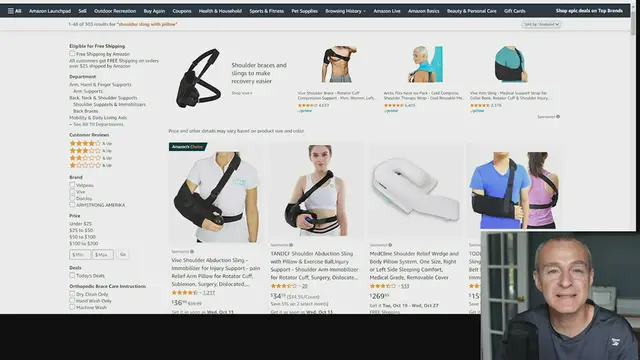
post-surgical sling that you'll be wearing after your rotator cuff repair surgery. So behind me on the screen you can see Amazon. I'm looking at some of
0:18
the slings that include the abduction pillow. So if you look closely right in
0:24
here behind there there's a cushion. You can see it here also kind of underneath
0:28
her forearm. There's a cushion that helps hold the arm away from the body at about 30 degrees of
0:35
what we call abduction. But a couple of things that they don't do a good job of here. If you notice in
0:41
this first image under the Amazon Choice, you can see that her hand, her wrist, is lower than her
0:48
elbow. So if that is the case, what's going to happen is you're going to get a lot of swelling
0:53
and fluid accumulation into the hand, the wrist, the fingers. I call it sausage fingers. I've got
0:59
another video talking about it but it starts to become pretty uncomfortable. So you would always
1:04
want the forearm to be at least horizontal. I always say the wrist just slightly above the elbow
1:10
and we want to line it up so that it's more kind of in neutral with the body. So my palm, the center
1:17
of my palm would be where kind of the middle of my sternum there's something called a xiphoid
1:24
process it's that little bony bump at the bottom of your sternum bone middle of your chest that's
1:30
where we want the hand to be and so positioning that before you have your rotator cuff repair
1:37
surgery is really helpful and important getting the sling a couple days before so you can fit it
1:42
properly so that you know how you supposed to wear it getting on and off without using that arm is always a challenge after surgery so if you can have it a little bit before surgery even better and then something else
1:54
that i would recommend if you notice this individual here in the red tank top she has
2:00
a secondary strap over the non-surgical shoulder it's a y or a split strap that helps take the
2:07
pressure off the base of the neck so if you're looking at the person on the left in the white
2:12
shirt that strap is cutting into the side of the neck over the brachial plexus that could potentially
2:19
lead to harm discomfort on the non-surgical side. I love this little attachment and most of the time
2:26
it comes with the sling you're going to get from your surgeon it's just people don't know how to
2:31
apply it how to put it on so using that it'll take the pressure off the base of the neck move it out
2:37
over onto the non-surgical shoulder a little better make life more comfortable but really if
2:44
you look at the pricing here you've got this off-brand $36 $37 sling you've got the Donjoy
2:52
which is the main brand that everybody uses for $97 depending on how you're covering the cost of
3:00
your surgery in most cases your surgeon and your insurance will cover the cost of your sling
3:07
but if you are looking for a way to manage costs a little bit better, Amazon and other retailers
3:13
do have an incredible deal on some of these slings that, you know, if you're going to get it
3:21
ahead of time, you might consider some of these. So guys, I hope this was helpful. If it is
3:27
do me a favor, subscribe to the channel. I'm trying hard to answer specific viewer questions
3:32
so feel free to post your questions in the YouTube comments, and I'll see you on the next video
3:37
Thank you
#Health