Up next in 10



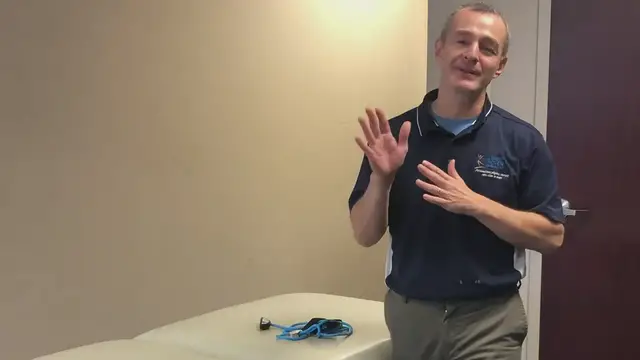
7 BEST Exercises for Frozen Shoulder - from Harvard Medical School HHP
Show More Show Less View Video Transcript
0:00
Hey guys, Tony Maritato here, physical therapist and in this video I'm gonna go
0:04
through the Harvard Health website's seven exercises to do for frozen shoulder. Now they've got a great article, I might not necessarily agree with every
0:14
exercise they've chosen, but in this video you're gonna see a demonstration of
0:19
each of the seven exercises and I'm going to talk about some of the things that clients might not realize how or why they're supposed to do those
0:26
exercises when they're supposed to do it. So let's start with exercise number one it's called the pendulum. These are also called Codman exercises but essentially when
0:36
you think of the shoulder the shoulder is essentially made up of three bones. We've got
0:40
the humerus which is the upper arm bone, the clavicle which is the collarbone, and the scapula
0:46
which is your shoulder blade. Those three bones come together and they actually create the shoulder
0:52
structure and that floats over the rib cage. So if you think of my arm, my arm could weigh 8 to 12
0:58
pounds it's hanging there when I relax the musculature the arm sinks down and we create a
1:06
little bit of space inside the shoulder joint. The rotator cuff is for muscles that surround the
1:12
shoulder but within the shoulder joint when somebody has a painful shoulder an arthritic
1:18
shoulder it's the joint surfaces usually that are causing the pain or have the degenerative change
1:23
So the goal of the pendulum is to relax the shoulder, create a little bit of a suction cup effect
1:31
So the weight of the arm is pulling down and the musculature is totally relaxed
1:36
Typically, if you imagine my left shoulder is the one involved in the exercise
1:41
typically we want a client to be close to horizontal, close to parallel with the ground
1:47
The involved upper extremity is just relaxed and hanging down. And the way I know that the therapist, rather the patient, is doing it right is as the body moves, the extremity trails
2:01
If your wrist and hips are moving together in exactly the same sequence, your shoulder is too tight
2:08
What should happen is my hips move forward, my hand follows, my hips move back, my hand follows
2:14
And it's just a dead weight on a string. Think of a pendulum just like this
2:20
imagine that's your hand and your shoulders up here. As I swing back and
2:25
forth it's just a relaxed gliding motion. That's what we want to achieve through
2:30
the shoulder. So typically we'll do about 20 front to back. We'll do about 20 side
2:36
to side. You can do circles clockwise, counterclockwise. You can also experiment
2:41
with your hands position. When my hand is relaxed, it's usually facing the body. As
2:45
I rotate my hand over, it's going to expose different structures of the
2:50
shoulder. So that is the pendulum exercise. The next exercise on the list is the towel internal
2:57
rotation. Now if you have a pulley system, I like it. They're really inexpensive. This is by Rangemaster
3:04
They do an amazing job. They've got really great quality. So instead of using a towel, I'm going to
3:10
use the pulley system because it's got the handles. And essentially what I'm going to do, I roll it
3:15
flip it over my shoulder I bring it down to meet my hand where it is And so in the traditional way of doing the towel internal rotation internal rotation is this motion here The towel would be pulled up The hand is going to move up the spine My knuckles are literally on my spine
3:36
And as my range of motion improves, I can get that a little bit higher. Now what happens in the
3:42
clinic and what patients tend to do wrong is they tend to allow the shoulder to spill over the front
3:47
this isn't really a beneficial posture for us it's more important that we keep our chest up our head
3:54
up even if we don't get as much range of motion behind us we would always rather you have better
4:01
quality movement than more movement without proper form proper technique so i would pull up i get my
4:10
knuckles to my spine. I relax the shoulder down and back and then I would drape the towel or the
4:17
pulley over my opposite shoulder to act as an anchor. This could be a position I spend 20 to 30
4:23
seconds in. I release the tension and relax it. If I don't have the range of motion to come up this
4:30
way, an alternative would be across the back of the body and so as I'm pulling across I might go
4:38
from my left same side pocket sacrum opposite side pocket usually once you've
4:44
gotten to this point then we can start going up toward the opposite side
4:49
shoulder blade these are internal rotation stretches but they should also include scapular retraction the next exercise on the the website is called
5:01
finger walks now the way this is typically done is the individual would
5:07
place their hand against the door or a wall they would walk their fingers up
5:12
the wall. The problem with that exercise typically is we see a lot of
5:16
compensation in the clinic we see a lot of shoulder hiking so people are lifting
5:21
at the shoulder to get the hand higher it's just not a very effective strategy
5:27
for that. I'm going to show you two alternatives so if you have a shoulder pulley system
5:37
You can use the shoulder pulley system to assist with finger walks
5:44
I'm gonna adjust this handle just to shorten it. And essentially what it is, it's my left shoulder that's the involved shoulder, the painful shoulder
5:55
As I pull on the right hand down, the left hand is being pulled up the wall. You certainly can use your fingers to walk with it or not
6:04
it doesn't really matter too much, but the idea is that my right non-involved side is actually
6:12
gliding the left side up the wall. You bring it up to the point of stretch, you bring it up to the
6:18
point of discomfort but not pain. You might hold a position for 10, 20, 30 seconds and then you
6:25
release the pressure. Again, the primary objective here is to keep the shoulder low. So don't
6:34
height the shoulder. The shoulder shouldn't come up toward your ear lobe. It should be down
6:39
As the hand goes up, we'll hold the position 30 seconds. Let it come back down
6:45
An alternative version for the finger walks up the wall would be a simple towel Towel pillowcase any kind of cloth You would place it against a smooth wall and you would glide up and you would glide back down you can hold the top
7:03
position 20 to 30 seconds come back down what's important to understand is that
7:09
when I'm using the pulley system even though the hand is going up the muscles
7:15
under the shoulder are actually pulling down which tends to be a better position
7:20
for the glenohumeral joint than when I'm doing a traditional finger walk or I'm doing a towel slide
7:27
Because when I'm doing a towel slide, I'm actually using the muscles on top of the shoulder to lift the humerus
7:33
more than the muscles underneath. So just considerations, things for you to think about
7:40
If it's painful, move on to the next exercise. The next exercise on the Harvard website is the crossbody reach
7:48
And there's a couple ways we can do this. This stretch is probably most commonly seen in golfers or tennis players. If it's the left shoulder that we're stretching, the left arm reaches across the body, the right hand comes underneath
8:03
And there's two things that I'm really thinking about. I'm thinking about bringing it around my body, but I'm also thinking about keeping that shoulder nice and low. Typically, we're thinking about bringing the inside of this elbow toward the inside of the opposite shoulder, but the priority is low through the shoulder. When I press down through the shoulder, I create space between my earlobe and my shoulder. I can feel that stretch engage in the posterior capsule. That's what we're trying to stretch
8:33
If I just cram that shoulder up into my chin, up into my ear, I'm not getting stretched
8:40
In fact, I'm getting pinching at the AC joint or the AC joint
8:43
So I reach around my body. I relax that shoulder down. I get a little bit of pressure in toward my opposite side shoulder
8:53
I'll hold this stretch for 30 seconds. Relax the tension. Repeat as indicated
8:59
The armpit stretch is the next stretch in the series. On the website, the person is doing it standing at a tall counter
9:07
They put their hand there and they sit down into it. Since I don't have a tall counter, and many of you won't
9:13
we're going to use a countertop, kitchen counter, table, desk, anything like that
9:19
And typically what we're going to do, we're going to come into this position
9:23
the hands resting comfortably on the countertop. And so you can understand at this level
9:28
if 90 degrees of flexion is parallel with the floor and level with the shoulder, I'm at less
9:35
than 90 degrees of flexion right now, but as I slide my hips back in the chair and lean forward
9:42
this position, if I froze it in time, is the same as this position. So the more horizontal I get
9:50
I'm stretching under the arm, I'm stretching the lat, the teres, the musculature that pulls down
9:56
on the shoulder but this is also the musculature that restricts overhead reaching so we'll get down
10:04
into this position we'll hold it for a 30 second stretch we'll take the pressure away and then we
10:10
can repeat as indicated now as the article gets into two of the strengthening exercises which are
10:17
common across almost every physical therapy program they talk about a resisted external rotation resisted internal rotation I going to show you a couple ways to do it with a simple pillowcase towel but then I also show you a couple pulley exercises that you can do for resisted internal external rotation
10:36
Typically, we want the elbow bent to 90 degrees. We want the arm resting comfortably at your side
10:41
If you've been in physical therapy, they might put a little cushion or pillow underneath you
10:45
just to get the elbow off the ribcage somewhat. it's not that important if you don't have that available. But one way to work
10:54
external rotation, one of my favorite ways to do it without any other device is
10:59
to hold a simple pillowcase or towel in the palm of the arm we're working. We want
11:05
to be palm up position and my other hand is going to be the resistance, so my
11:10
right hand is pulling away against the movement of my left. As I resist this
11:17
motion it's concentric external rotation. As I resist the pull in that would be
11:23
eccentric internal rotation. Some tendinopathy, tendinitis conditions respond really well to an eccentric program. So talk to your physical
11:33
therapist if they want you to do it concentrically, eccentrically, both. But
11:38
this is resisted external rotation for the left shoulder. Now if I want to do
11:45
resisted internal rotation it gets a little more tricky but essentially what
11:50
I have to do is come across my body and resist the pull in. The other way I can
11:55
do it is simply push out on my left wrist as I'm pulling back in. So now I've
12:01
got concentric internal rotation and I've got eccentric internal rotation because my right is overpowering my left. These two motions while they look almost
12:14
identical or completely opposite working different musculature within the shoulder. Now if you're looking to use your shoulder pulley system typically
12:26
what I do is I bring it down about the level of the doorknob. I come away again
12:32
we're thinking about my left hand as the side that I'm working so I can do an
12:37
eccentric internal rotation when I'm resisting my right. I could do a
12:43
concentric internal rotation against the resistance of my right. I can flip
12:49
around. I've got concentric external rotation, concentric internal rotation. I could do isometric by putting both handles in one hand. I get to a certain
13:01
angle and I'm trying to rotate out, but because the ropes won't let me, this
13:07
creates an isometric external rotation and of course isometric internal rotation. That is a video demonstration of the exercises that were put out on the
13:20
Harvard Health website. If you have questions, if you have thoughts, please
13:24
talk to your physical therapist. Let them know you've watched this video and that
13:29
you would like to know if these exercises would be appropriate for you. As always, thank you so much for your support, for watching the channel, and if
13:36
If you want to subscribe, we're putting out content every single day to help people at
13:42
home better understand how to manage their shoulder pain, how to improve their home shoulder
13:47
program exercises, and get back to doing the things that they love
13:51
Guys, I'll catch you on the next video
#Health